
Read a Kiowa County Property Tax Record
A Kiowa County property tax record is really a set of documents. It is not a single page. The Appraiser discovers, lists, and values property. The Treasurer collects real-estate taxes. The Clerk prepares the roll, certifies levies, and tracks special assessments. Match your question to the right field before contacting any office.
| Tax-record field | Meaning | Official source |
|---|---|---|
| Appraised value | The county's fair-market-value estimate unless special law applies | County Appraiser |
| Assessed value | Appraised value multiplied by the Kansas class rate | County Appraiser |
| Current and prior value | Year-to-year valuation history printed on the annual notice | Notice of Value |
| Tax and payment status | The billed amount, receipt, balance, or delinquency | County Treasurer |
| Levy or special assessment | Rates and charges carried onto the tax roll | County Clerk duties |
Assessed value is not the bill. It is not a sale price either. Taxing bodies apply their levies to the assessed figure, and a deed may carry consideration language, though the sales-validation questionnaire stays confidential and the county promises no public sale-price database.
Three Kiowa County Offices Divide the Tax Work
The office split is the first local fact to understand. Appraiser D.J. McMurry handles valuation review and informal appeals at 211 E Florida Avenue. Treasurer Brenda Osborne handles collections at the same courthouse. The Clerk calculates valuation and taxation abstracts, prepares the roll, certifies levies, and processes abatements, additions, escapes, sewer costs, and special assessments.
Call the Appraiser at 620-723-3301 for value data; call the Treasurer at 620-723-2681 for a balance or statement question. Both offices publish weekday hours of 8 a.m. to 5 p.m. A question about how a levy or special assessment entered the roll belongs with the Clerk.
Note: Ask for a named tax year because valuation, billing, payment, and delinquency records can describe different points in the same parcel's history.
The county's official Appraiser page shows the local valuation role and appeal route.
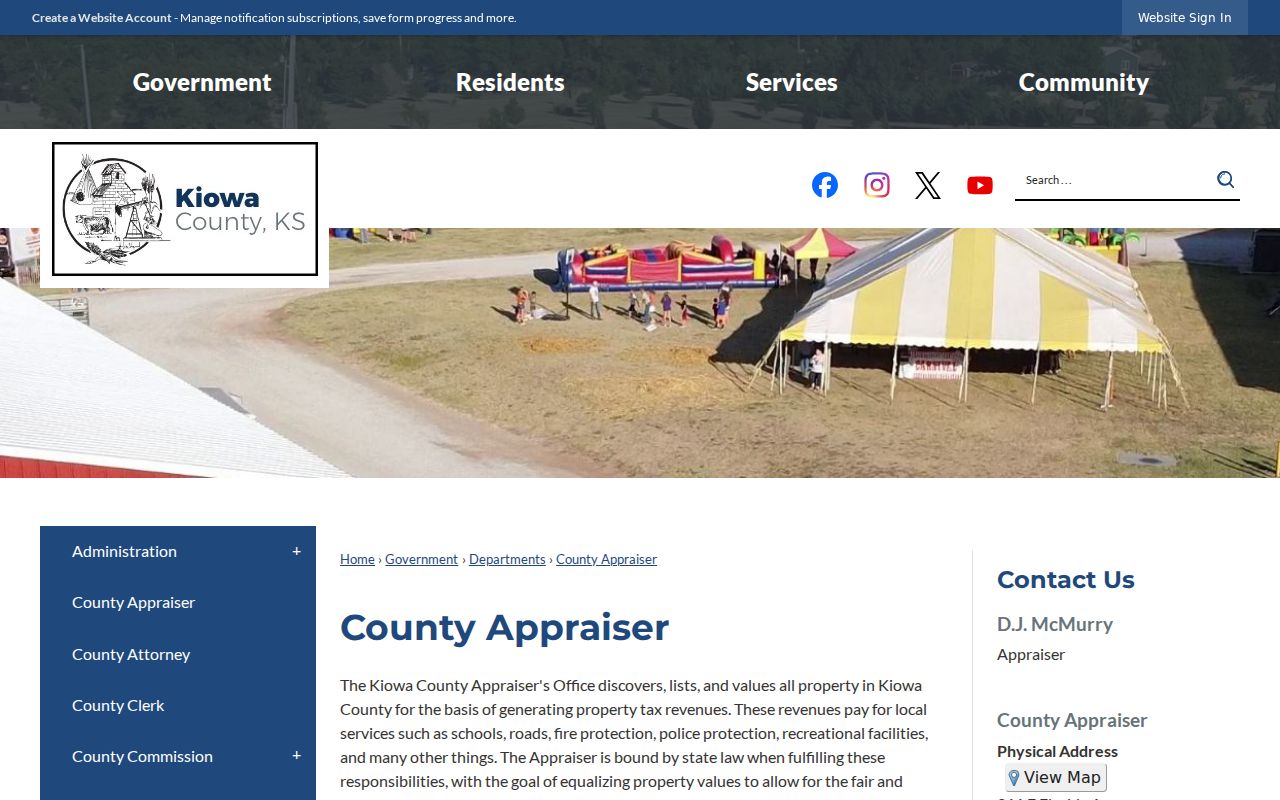
The county's own office page is the dependable starting point for assessment questions. It is no substitute for a parcel-specific value card, which the office can supply directly.
Kiowa County Annual Value Notices Start the Cycle
The Appraiser mails real-property valuation notices in early March. Each notice shows current and prior-year values. The county aims to inspect each property once every six years. This happens when possible. The visits check exterior condition, dimensions, improvements, damage, and removals. Computer analysis weighs age, size, style, replacement costs, and sales. The notice matters even without an online parcel card. It supplies the exact property and value context an office review needs. Keep the envelope and mailing date. The appeal clock runs from the notice, not from a later tax bill.
How Kansas Converts Kiowa County Value to Assessment
K.S.A. 79-1439 generally calls for fair-market appraisal and sets the class rates. Residential property is assessed at 11.5 percent. Vacant lots sit at 12 percent, and commercial or industrial property at 25 percent. Agricultural land follows a different system. It draws on state agricultural-use value with a 30 percent assessment rate, and farm residences remain residential property.
- Appraised value
- The county estimate of fair market value, except where Kansas law supplies another basis.
- Assessed value
- The appraised or use value multiplied by the applicable property-class rate.
- Levy
- The tax rate applied to assessed value by the relevant taxing authorities.
- Tax lien
- A legal claim tied to unpaid tax, which is different from the annual valuation itself.
The state value guide explains the same math. For a closer comparison of these figures, the Kiowa County property value guide spells out what each number means.
Retrieve a Kiowa County Property Tax Bill
Kiowa County publishes no online tax-bill search. The statewide payment page asks for details already printed on a county tax statement, so it cannot replace a missing bill. For Kiowa County property tax records, use this fallback sequence:
- Collect the situs address, parcel number, owner spelling, and tax year from the notice or statement.
- Ask the Treasurer for the bill, payment status, and any balance for that identified parcel and year.
- Use Kansas.gov property-tax payment only when the statement supplies its required details.
- Ask the Appraiser about the value record and the Clerk about a levy or special assessment.
When a routine inquiry is not enough, phone, in-person, mail, fax, and a focused Kansas Open Records Act request remain the documented routes. Ask for one record, one parcel, one year. That is different from a compiled report. The Kansas property-tax payment page also illustrates the statewide payment route.
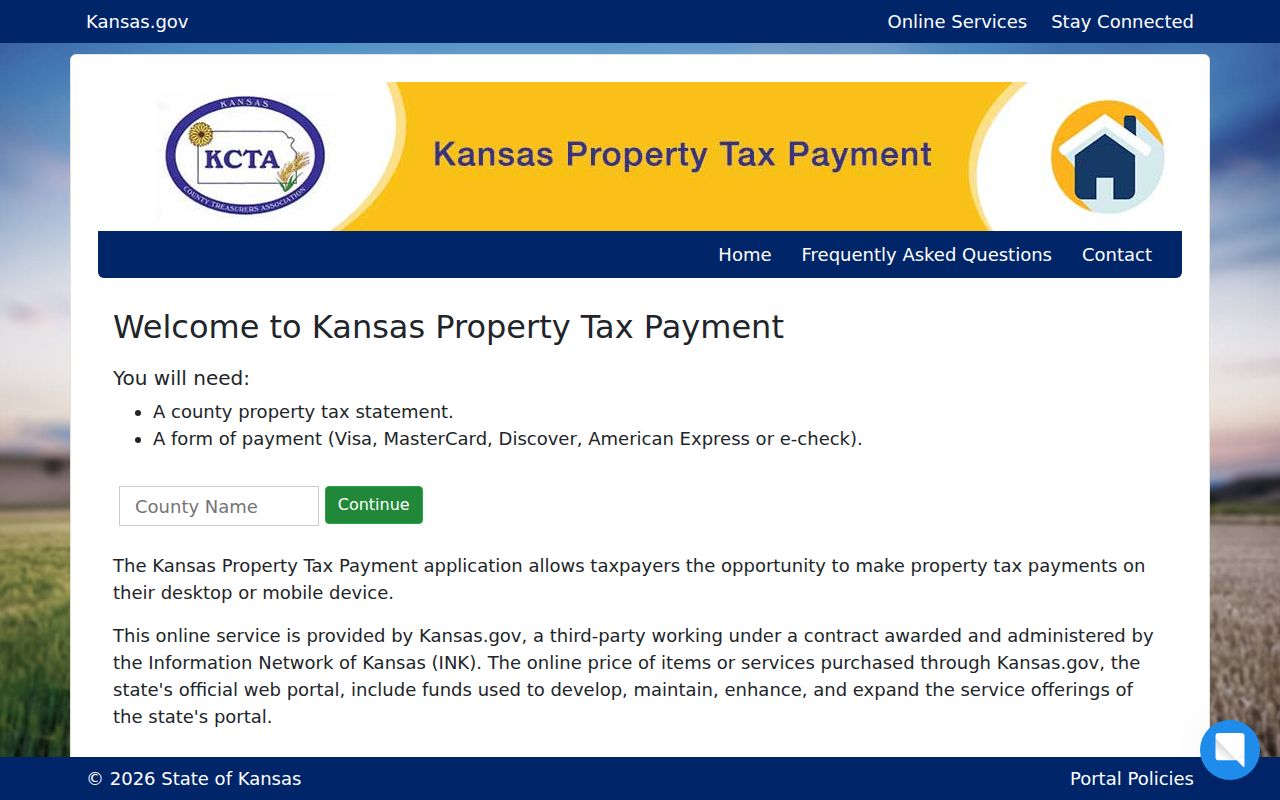
Its county-selection flow still depends on statement details, so the Treasurer is the fallback when the bill itself is missing. The Kiowa County Treasurer page gives the contact.
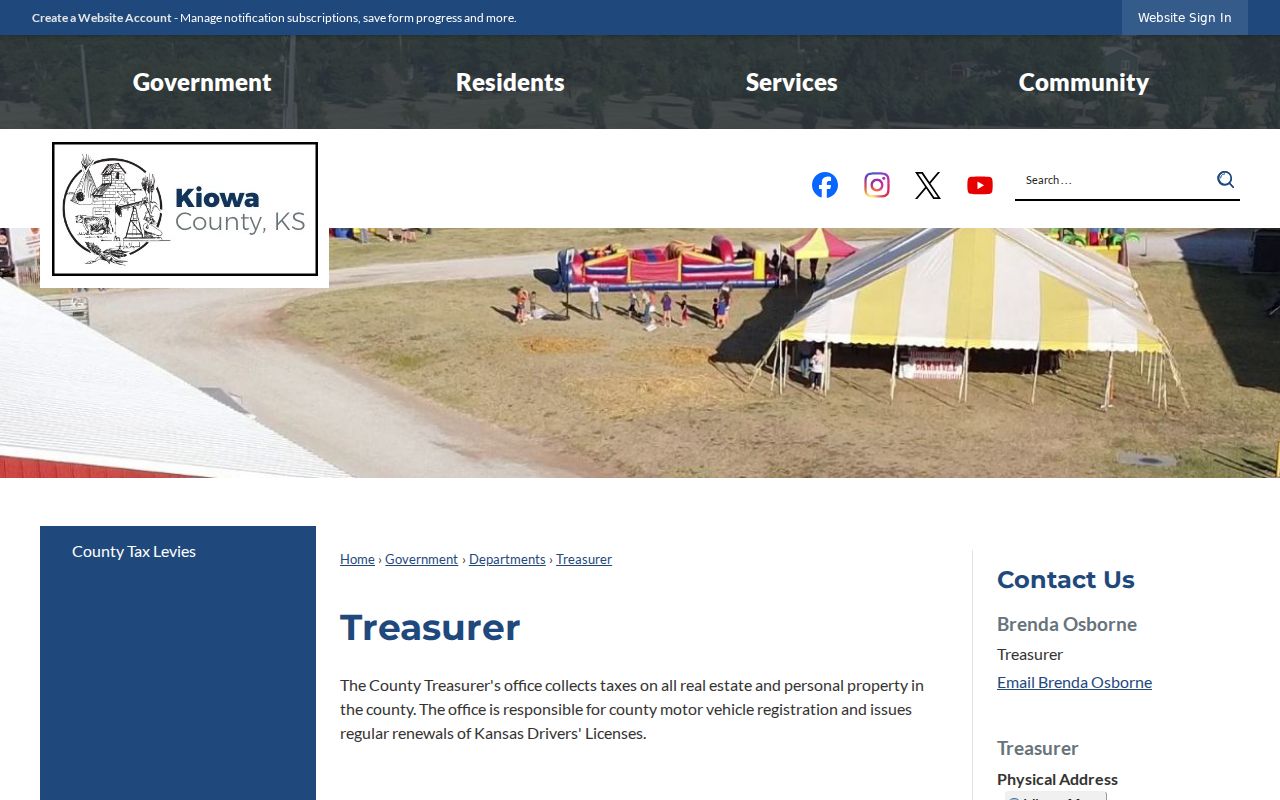
The county site offers no live parcel-balance search, so the Treasurer's office route remains the way to check what a parcel owes.
What Kiowa County's 2026 Market Study Found
The 2026 market-study results frame the assessment roll. Newer residential property, defined in the study as built after 1959, trended up 2.9 percent per year. Older residential property rose 3.5 percent. Commercial property and vacant land held stable. These are category trends, not automatic adjustments for every parcel. Improvements, corrected descriptive data, condition, and the comparable sales chosen for a property can still yield a different result. Agricultural use values come from the annual state study. They should not be read through the residential trend.
Track the Kiowa County Property Tax Calendar
Kiowa County's calendar runs in a familiar arc. Renditions fall at the beginning of the year, valuation work fills the spring, the roll is certified in summer, and tax bills arrive late in the year. Preserve the dates on your current notice. State and county calendar pages differ on some certification labels.
| Point in cycle | County-published timing | Action |
|---|---|---|
| Real-property notice | First part of March | Review description and value promptly |
| Personal-property rendition | Due March 15 | Submit the required rendition |
| Oil and gas rendition | Due April 1 | File with the proper property detail |
| Roll certification | County page lists June 15 | Clerk receives the valuation roll |
| Tax bills | After November 1; due December 20 | Check statement and payment route |
Note: The state calendar is context; the mailed Kiowa County notice and current office guidance control the owner's live deadline.
A Kiowa County Tax-Sale Notice Is a Dated Snapshot
The December 11, 2025 sheriff tax-sale notice is a useful sample of Kiowa County delinquency records. It is not a live ledger, though. Each row pairs a tract or parcel number with the legal description. It also lists taxes and charges, the first delinquent-sale year, the owner of record, and known interest holders. One entry cites Kemp's Second Addition to Haviland. That is a reminder of why legal descriptions anchor any property search.
Start from the archived county notice to pin down the parcel. Then ask the Treasurer for current balance or redemption details. Ask the District Court about any related proceedings. Kansas publication statutes include K.S.A. 79-2302 and 79-2303. A name on a dated sale list is never proof of the current owner.
The Kiowa County Tax-Card Gap Changes the Search
Kiowa County publishes no public parcel card or live tax bill lookup on its pages. The KDOR Central Repository stops at a User ID and password gate. That is an access gap, not proof the property records are unavailable. The practical move is carrying precise identifiers to the right office.
A written request should name the parcel, the year, and the record wanted. That record could be an annual value notice, a value-detail card, a tax statement, or a payment entry. Ask whether inspection is possible. Also ask whether copies go out by mail or fax, and what fee estimate applies. KORA guidance sets a written response at generally three business days, though completion can run longer.
Contest a Kiowa County Property Tax Assessment
An owner who thinks the appraised value exceeds a realistic selling price can request an informal hearing through the Kiowa County Appraiser. The filing deadline is 30 days from the valuation notice mailing date. The office supplies the form in person or by email, gives at least ten days' notice of the hearing, and describes an informal meeting lasting about twenty minutes.
Bring evidence tied to the parcel itself. A professional appraisal, sales contract, survey, repair estimates, photographs, or well-matched comparable sales all work. A representative must file a Declaration of Representation. Drop the appeal, and the county warns the same parcel and tax year cannot come back through that route.
Protect the deadline. File with the Kiowa County Appraiser within 30 days of the notice's mailing date and follow the current notice's instructions.