
Starting a Kiowa County Property Search
A smart Kiowa County property search starts with the custodian. The Appraiser holds the parcel record for any address. It ties the situs, owner of record, mailing address, parcel number, legal description, and value fields together. The Register of Deeds keeps deed records and recorded transfers. The Treasurer handles the tax bill and tax roll questions. The county names each office on its own pages. No single portal returns results from every system at once.
Keep brief notes as you go. Jot down the spelling you searched and the parcel number. Add the legal description and any book or instrument reference the office gives you. That habit keeps an assessor's dated snapshot from being read as current title. It also stops a historic plat label from passing for a modern boundary.
- Normalize the situs address, city, ZIP code, and any rural-route information.
- Ask the Appraiser to identify the parcel and owner-of-record entry.
- Use the legal description and owner spelling to request the current vesting deed.
- Check the Treasurer’s current statement and any dated delinquency notice separately.
- Use recorded plats, official context maps, and a survey when boundaries matter.
Kiowa County Records Custodians
Three courthouse offices answer most Kiowa County land-record questions. The Register of Deeds records real-estate instruments. The Appraiser discovers, lists, and values property for the tax base. The Treasurer collects real-estate and personal-property taxes. All three sit at 211 E Florida Avenue in Greensburg. The county directory places the Register and Appraiser on the main floor's northwest and northeast corners and the Treasurer in the southeast corner. Direct your request to the custodian who actually holds the record. Skip broad inquiries to an unrelated office.
Kiowa County Register of Deeds
211 E Florida Avenue
Greensburg, KS 67054
620-723-2441
Kiowa County Appraiser
211 E Florida Avenue
Greensburg, KS 67054
620-723-3301
Kiowa County Treasurer
211 E Florida Avenue
Greensburg, KS 67054
620-723-2681
When online lookup falls short, the offices document several fallbacks: counter service, telephone, fax, mail, and a formal Kansas Open Records Act request. Before sending payment, ask whether inspection is available, which locator the office needs, and what copying or certification charge applies.
Kiowa County Deed Access Reality
The Register of Deeds records deeds, mortgages, releases, assignments, easements, plats, oil-and-gas leases, liens, UCC filings, and powers of attorney. The office publishes no online grantor-grantee index, deed-image portal, start year, or result limit. Kiowa County deed records therefore remain a phone-and-counter proposition. The gap is one of access, not of the books themselves. Call or visit with the owner spelling, legal description, approximate recording date, and any known instrument locator.
The office is a recorder, not a research service. Ask for a specific index entry or instrument, then read the document yourself. Listed charges run $1 per ordinary page, $2 per faxed page, and $13 for a certified instrument. Confirm the current schedule before ordering. The full deed workflow sits on the Kiowa County deed records guide.
Plain-language definitions. A grantor transfers an interest; a grantee receives it. A parcel number identifies a tax or mapping unit. A plat lays out lots, blocks, streets, and additions. Assessed value is the taxable value after Kansas classification rules, not necessarily a likely sale price.
The official county Register of Deeds page appears below. Its emphasis on office services and recording categories is exactly why the telephone and counter route still matter.
View the Kiowa County Register of Deeds source.
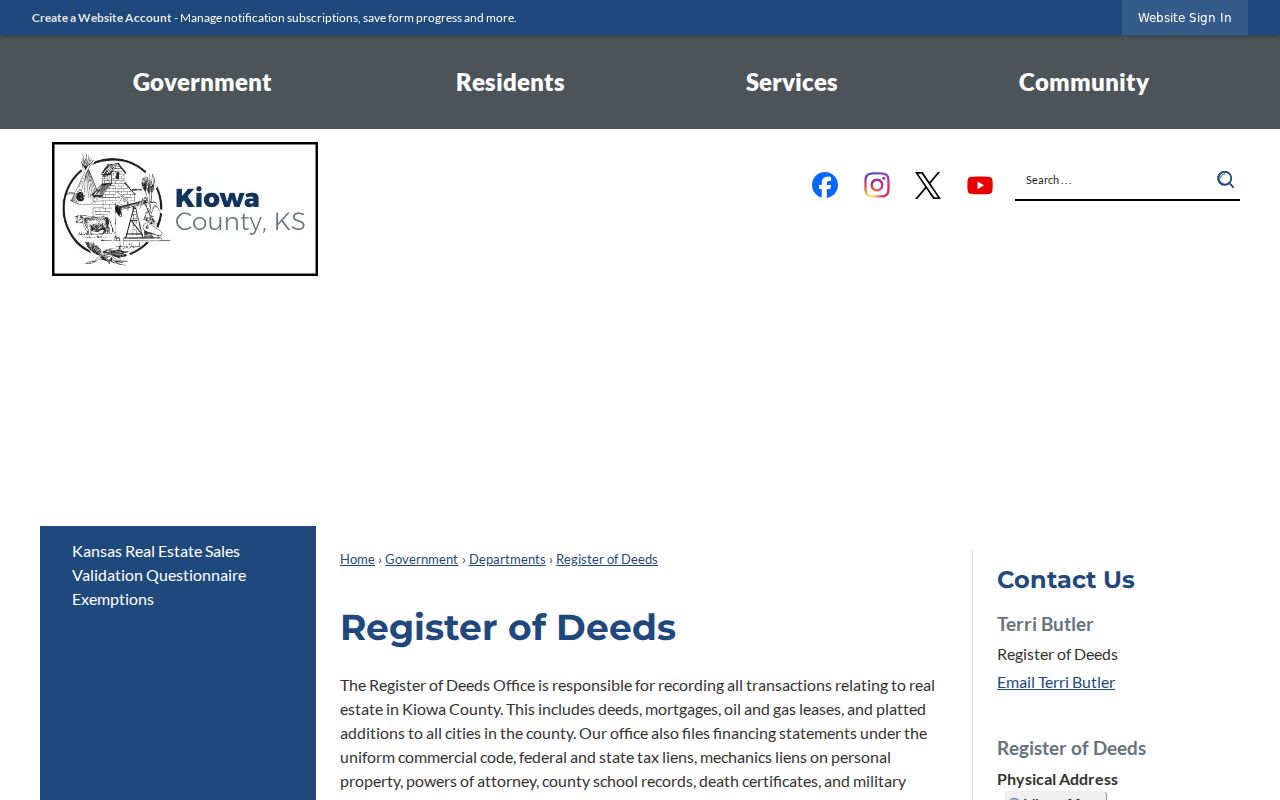
The page confirms the custodian and the services offered, not a searchable deed database.
Kiowa County Appraiser Record Fields
A good appraiser request is concrete. Give the full situs address. Ask for the parcel number, owner-of-record name, mailing address if public, property class, legal description, land value, improvement value, appraised value, assessed value, prior-year value, and effective or update date. Those are the fields a Kiowa County property search should target. The official county page does not promise every field appears on a public card. Some may require office review.
| Requested field | Why capture it | Verification |
|---|---|---|
| Situs and parcel number | Fixes the property identity | Match the legal description |
| Owner and mailing entry | Shows the assessment roll name | Confirm with the latest deed |
| Land and improvements | Separates value components | Compare current and prior notice |
| Appraised and assessed value | Distinguishes market estimate from taxable base | Apply the correct Kansas class |
| Record date | Reveals how current the snapshot is | Note any deed-to-roll lag |
The KDOR Central Repository System endpoint stops at a User ID and Password login. Its owner and address matching behavior is not documented for public use. The parcel refresh cycle is also undocumented. Office review, phone, fax, and mail are sound alternatives for Kiowa County appraisal data. A targeted records request works as well.
Open the official Appraiser page shown here.
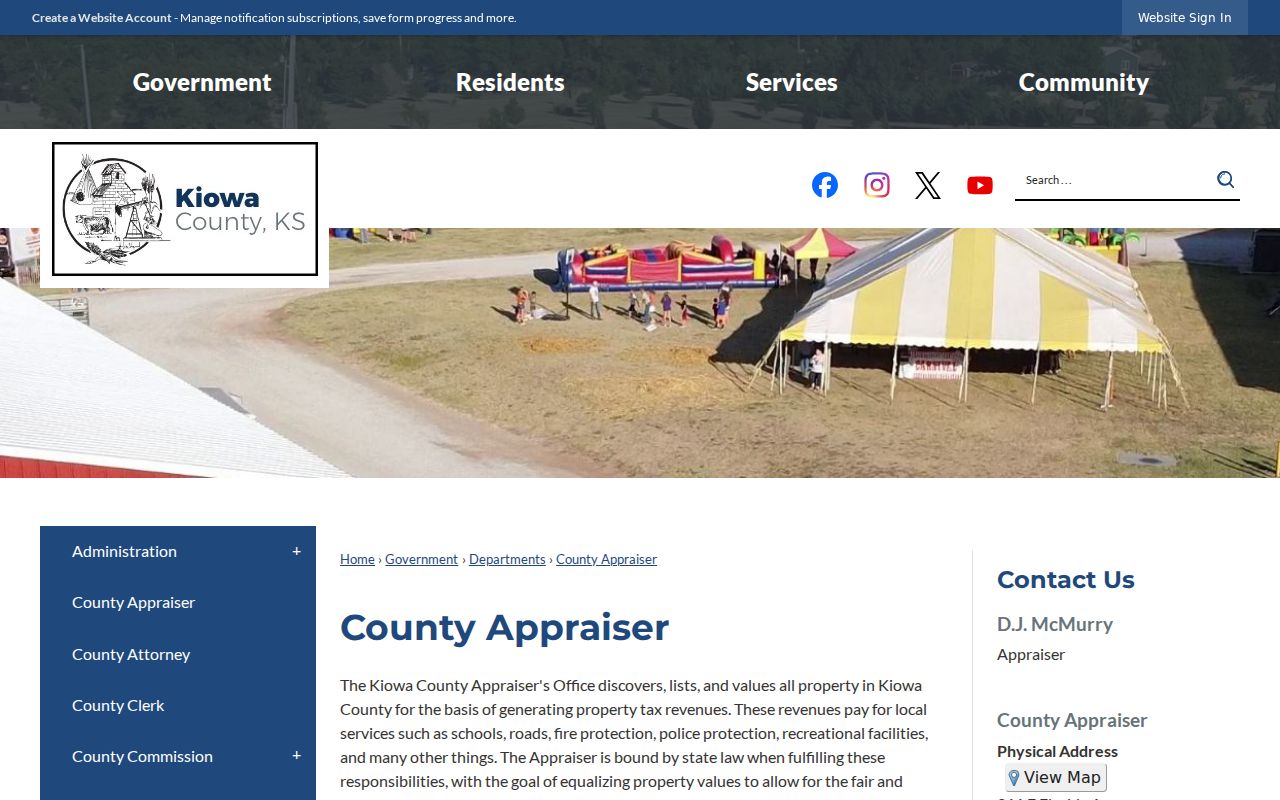
The county source covers valuation duties and appeal access rather than an open parcel-results screen.
Kiowa County Land Record Types
No single record answers every question. The assessment roll is an administrative snapshot. A recorded deed proves a conveyance, and a tax statement tracks billing and payment. A plat shows recorded lot-and-block geography, while a municipal permit file documents physical work without proving ownership. Match the record to the fact you are testing.
| Official record | Question it helps answer | Responsible office | Verified route |
|---|---|---|---|
| Deeds and mortgages | Transfers and recorded encumbrances | Register of Deeds | Counter, phone, fax, mail, or KORA |
| Assessment roll | Owner entry, description, classification, value | County Appraiser | Office review or request; web login is gated |
| Tax statement | Levies, charges, payment, delinquency | Treasurer and Clerk | Statement plus office contact |
| Plats and map context | Lots, blocks, roads, municipalities, hydrology | Register and GIS publishers | Recorded plat plus official context layers |
| Permit and zoning files | Authorized construction and land-use review | Greensburg, Haviland, or Mullinville | City clerk or building office |
| Civil and probate cases | Quiet-title, foreclosure, estate, or lien disputes | District Court | State portal, public terminal, or clerk request |
Deeper detail lives in the focused guides for Kiowa County property tax records and Kiowa County parcel maps, which keep this overview from doubling as a technical manual.
Kiowa County Value Calendar
Kiowa County values run on a fixed rhythm. The Appraiser mails Notices of Value in early March. Each notice shows current and prior-year valuation history. Staff try to walk every property at least once every six years. They note exterior features, improvements, dimensions, damage, and removals. Computer analysis fills in the rest, weighing age, size, style, replacement cost, and sales.
The 2026 market study set a 2.9% annual trend for residential property built after 1959. Older homes came in at 3.5%. Commercial and vacant land held stable. Remember, those are category trends, not a promise for every parcel. Improvements, corrected descriptive data, and comparable sales can push an individual result either way.
Appeals are next. An owner generally has 30 days from the notice mailing date. Good support includes a recent appraisal, sales contract, survey, repair estimates, comparable sales, and photographs. The informal hearing goes quickly, so organize your evidence around the specific factual disagreement.
Kiowa County Tax Payment Limits
The Kansas property-tax portal takes a county selection plus details from the tax statement. It then processes the payment. Paying a bill is not the same as a Kiowa County parcel lookup. If the statement is missing or an amount needs explaining, ask the Treasurer. Do not guess a balance from a dated notice. The Treasurer page carries the office's own contact details.
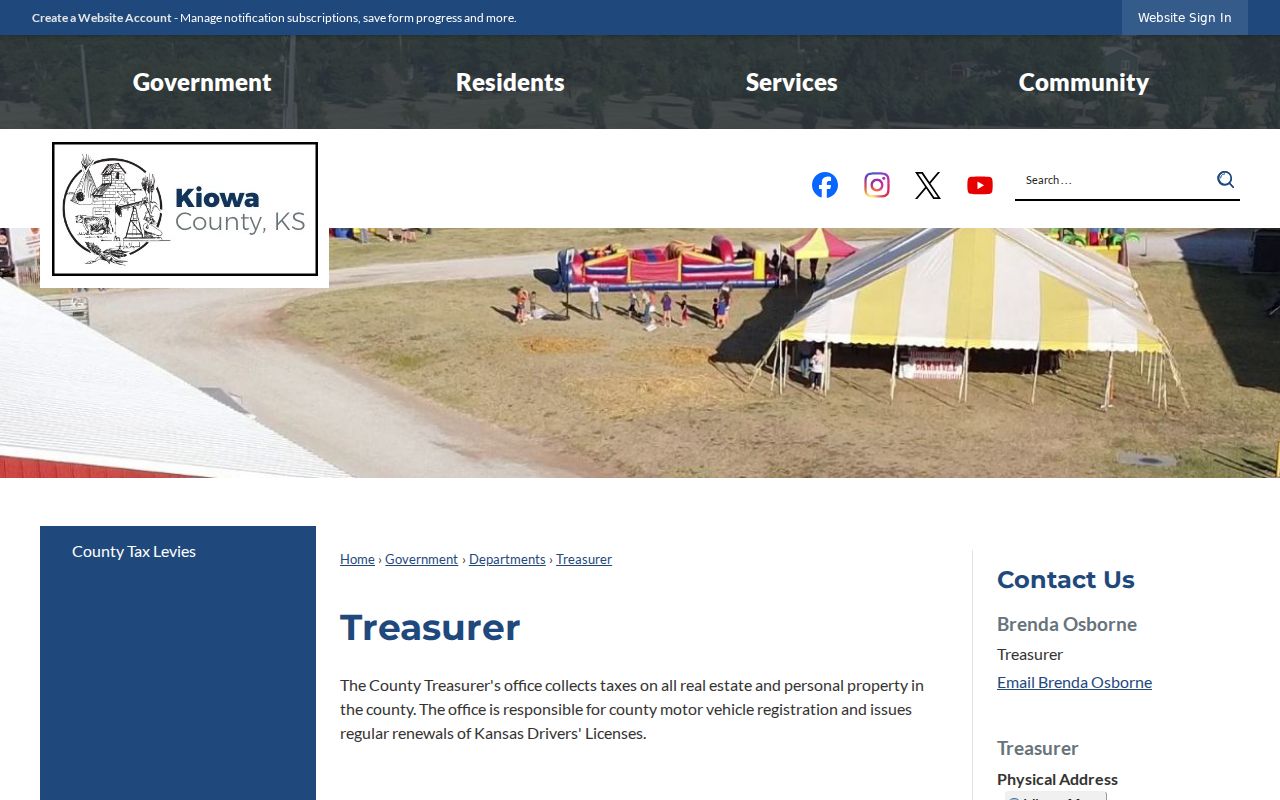
The Treasurer's published information is the authority here. The county posts no public bill-result table, so current parcel charges still come from the statement or a response from the office itself. The statewide payment service handles payments only.
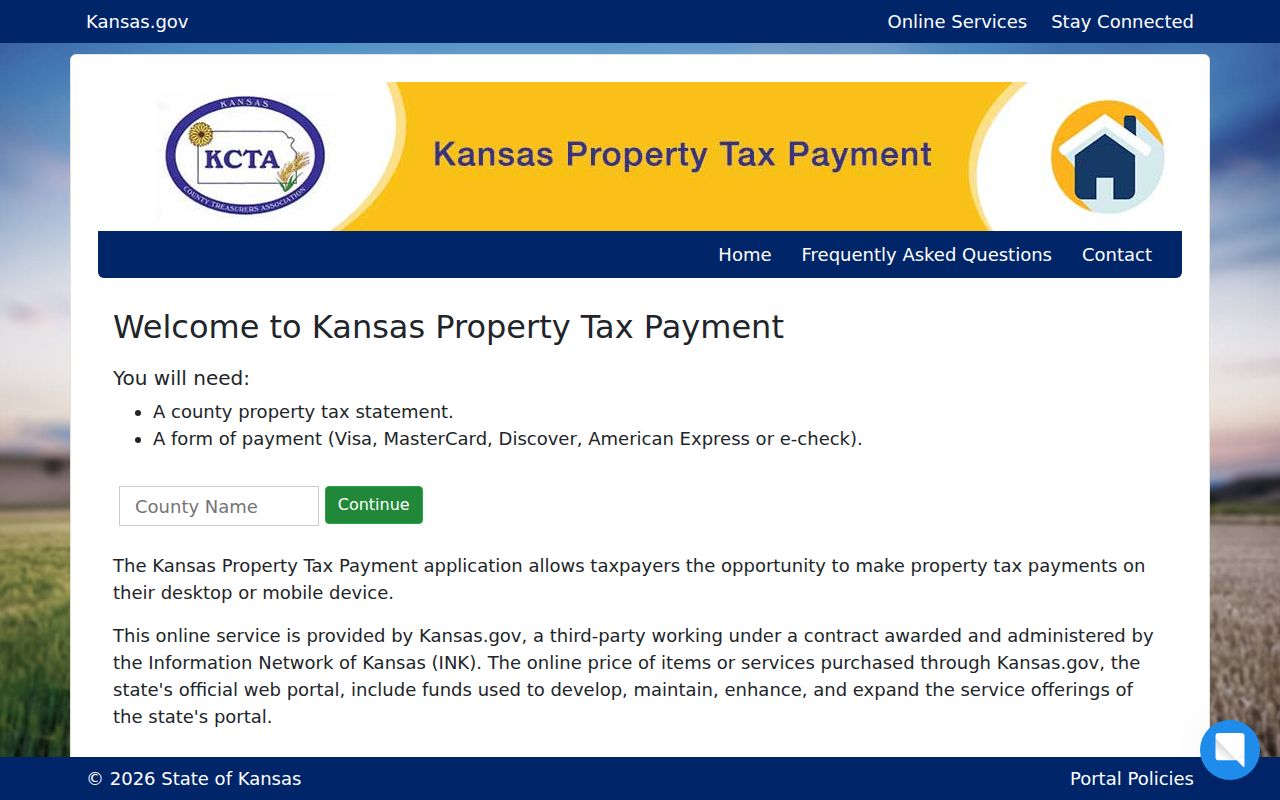
That split matters. Paying a known statement and uncovering a parcel's full tax record are two different tasks in Kiowa County.
Kiowa Tax-Sale Records Are Dated
The county's December 11, 2025 sheriff tax-sale notice packs a lot into one document. It lists tract or parcel identification and legal description. Dated taxes and charges appear next to the first delinquent-sale year. The owner of record and known interest holders sit side by side with them. One entry cites Kemp's Second Addition to Haviland. That subdivision name can bridge a tax notice to a recorded plat.
Treat it as a sale inventory from one moment. It is not a live balance screen. A listed owner of record is not automatically the present owner. A newer appraiser or deed check settles that question. Serious tax-sale research also pulls in the court file and redemption status. It reaches any recorded sheriff's deed and releases affecting known interests.
Mapping Kiowa County Without Parcels
The official Kiowa County ArcGIS service publishes context layers for transportation, municipalities, hydrology, legislative districts, and rail lines. It carries no parcel layer. The county offers no public parcel viewer. It has no parcel download and no tool for checking adjacent parcels.
Open the official ArcGIS service to see the layers yourself.
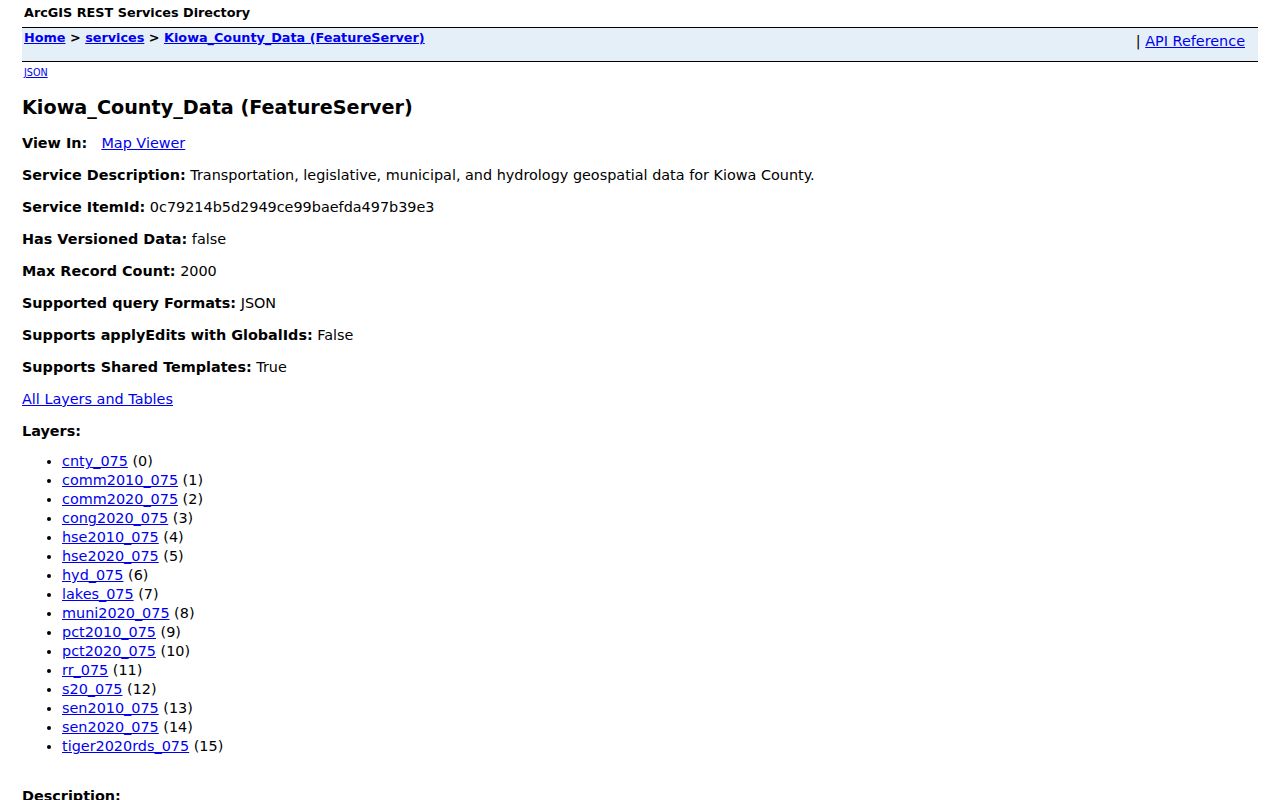
Road and municipal layers can help you find land. Colored lines prove nothing about title. Match them to a recorded plat or legal description, and bring in a licensed survey when the exact boundary controls a purchase, fence, easement, or construction decision.
Historic Kiowa Property Record Clues
The 1906 Standard Atlas of Kiowa County blends township maps, landowner labels, town plats, a patron directory, and portraits into one volume. Greensburg spans north and south sheets. The Haviland sheet adds Wellsford and Belvidere context. Mullinville's map shows its railroad, cemetery, and avenue grid. These dated clues shine when a modern address search dead-ends. A digitized atlas sheet is viewable at its source.

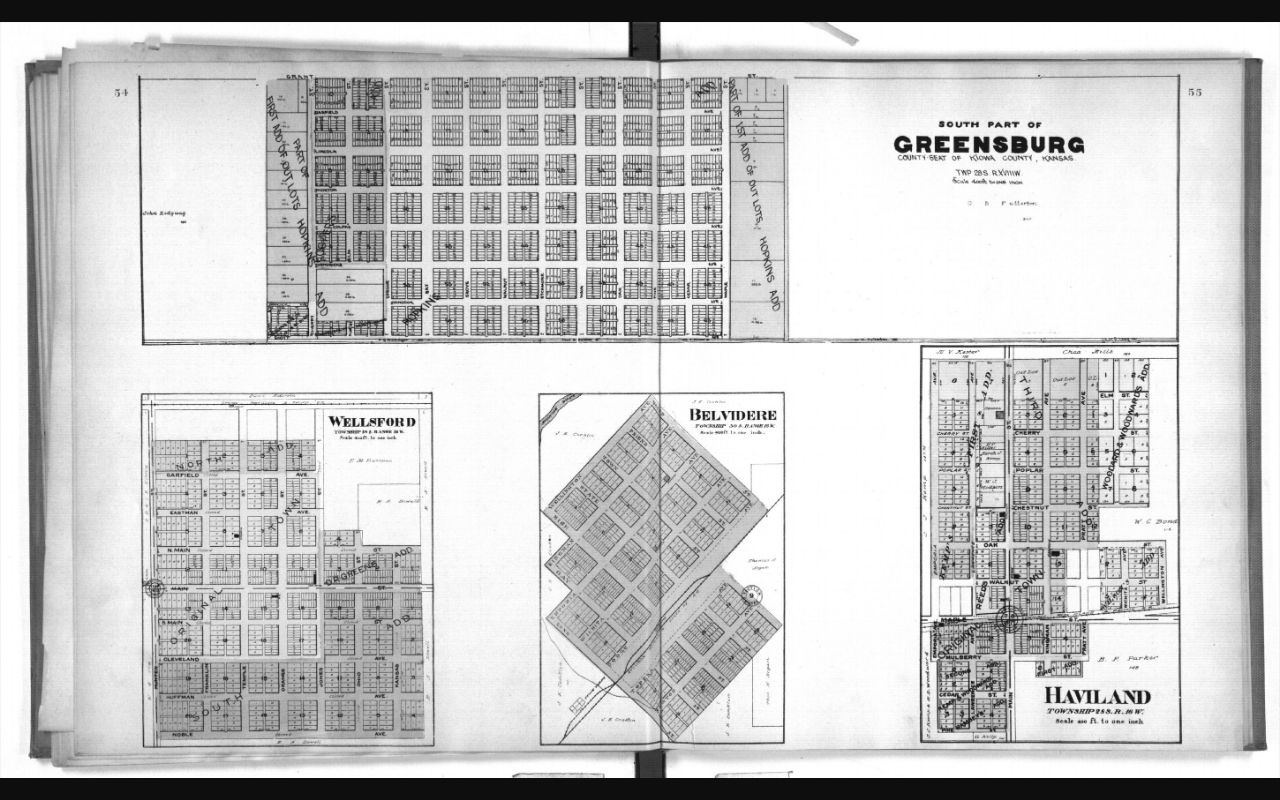
Treat a printed owner name as the start of a deed-book search, not the conclusion. The atlas is a 1906 snapshot, not an official deed index or a present-day survey.
Old Kiowa Place Names Matter
Historical searching in Kiowa County runs into a spelling problem. The Kansas Historical Society post-office database lists Greensburgh and Janes, Dowell changing to Wellsford, Brenham, and older Mullinville entries. Newspapers of the era include the Greensburg Rustler plus the Wellsford Register, Democrat, and Watchman. A search limited to current city names can miss a legal notice or address clue from the very same geography.
Bridge the name change with a stable locator. Section-township-range, lot and block, an addition name, a recorded instrument, or a dated plat all work. Then search the Kansas newspaper database by city, title word, county, and date range. Newspapers can corroborate a sale, estate, sheriff action, or construction event. They cannot replace the deed.
Greensburg, Haviland, Mullinville Records
Title, assessment, tax, and court records stay county-held for all three incorporated cities. Municipal files add a different layer. Greensburg Building and Codes handles permits and the city's post-2007 rebuilding record. Haviland routes forms through City Hall and keeps a land-bank lead for 207 E Walnut. Mullinville sends fence and permit questions to its City Clerk.
Each city guide keeps its own geography. Greensburg property records tie 1906 town lots to rebuilding files. Haviland property records lean on Kemp's Second Addition and historical Wellsford, and Mullinville property records follow the railroad-era grid and known landmarks. A city permit tells you about work or land use. It says nothing about who holds title.
Kiowa Court and KORA Routes
Some property disputes end up in court. Liens, probate, foreclosures, and quiet-title fights go to court. Filings can be reached through the Kansas District Court public portal, the courthouse public-access terminal, or a request to the Kiowa County District Court clerk. The portal shows case information only. Not every document appears online. Sealed case categories remain unavailable. For county material not exposed online, the Kansas Open Records Act route is narrower yet effective when you name an existing record. Be specific. Ask to inspect or copy a particular parcel card, deed index entry, plat, tax statement, or dated tax roll segment. The agency may request a written application or identification, charge reasonable actual costs, and refuse to create, re-sort, or transform data into a new report. The County Clerk serves as Freedom of Information Officer, though the Appraiser, Treasurer, or Register may actually hold the record.
Official Records Versus Aggregated Data
Official Kiowa sources
Start with the custodian, not the search box. Know the record type, effective date, and document locator; the responsible office supports certified copies and correction questions, though access may take a call, counter visit, fee, or targeted request.
Commercial data tools
Aggregators can mix stale addresses with mismatched owners. The controlling deed never shows up. Treat any aggregate result as a lead, never as proof of ownership, boundaries, taxes due, or market value.
When two official records disagree, compare what each one is for and when it was made. A new deed can precede an annual roll update. A tax-sale notice freezes facts for publication. A historic map may preserve an old name, so write the discrepancy down instead of forcing the sources to agree.
Limits on Kiowa County Records
Kiowa County property records have real reach. They document recorded conveyances, the appraiser's owner entry, taxable values, tax administration, plats, filed liens, permits, and court events. They cannot do everything. No file guarantees marketable title, finds an unrecorded interest, settles a boundary, establishes a property's condition, or promises a current sale price. A title professional, attorney, appraiser, or licensed surveyor may be needed for those conclusions.
Privacy limits matter too. Kansas Safe at Home protects eligible survivors. It supplies a substitute address and strips personal location information from public records, while a mailing address can be outdated, belong to an agent, or differ from the property situs. Never try to reverse-engineer a protected address.
Lawful use. K.S.A. 45-230 restricts knowingly selling, giving, or receiving public-record name-and-address lists to offer property or services. Kiowa County land records are appropriate for ownership verification, purchase diligence, tax appeals, boundary research, estate work, and civic transparency. They must not be used to stalk, harass, or harm anyone.